
Points:
Time spent:
IP address:
Canary word: Present
Possible AI signals:
Original Text:
Are you sure you want to delete this comment? This cannot be undone.
Mark this comment as a review? Points will be awarded to the poster.
Your comment was posted, but it wasn’t long enough to count as a review. Reviews need about four complete sentences (at least 250 characters). Try writing another review that explains your thoughts in more detail — the author will appreciate it, and you’ll earn points for it.
141,247 Literary Works • 674,329 Reviews



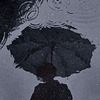

Text version :
bowed over
ardent in my devotion;
your blessing burning my neck.
festering;
seared and inlayed
tears of pain drying on my face.
trembling hands; ragged
black spotted vision
eternal press of my head to the ground
evidence of my devotion
pressed on my forehead
the dry exhale of my lungs
hands pressed together
my body wracked with my sincerity
blood dripping from my mouth
parched; my sacrifice escapes me
heat pulses
my head hangs in my shade
gasping
desperation drives me down
chased by life
battered by people
i arrive in your temple
the eternal sand of this desert
shaking, no breath
swaying, no water
bleeding, no escape
only with but my faith
head pressed to the ground
everlasting in my submission
unquestioning in your truth
searching in my quest for salvation
for my promised peace
best broken over in my prayer
your blessing scorching me
burning my skin
exhaustion filled in my bones
no moisture left for my tears
helpless in my weakness
vision darkening.
dry, parched, slick burnt skin
swaying falling
nothing left fighting
driven into my faith
given no escape
presented but one path
head pulled back
ravaged staring at the sun
barely parted lips; whispering
“here lies your devotee”
Hi canopy!

Lim here with a review. My initial reaction was that this poem made me feel a sense of torturousness, with this image of a devotee kneeling in a desert, begging for something that still doesn't show up by the end of the poem. I can sense the speaker's desperation. On a second read, I noticed a couple of things that developed my interpretation:
1) The shape of the poem, the way the lines are arranged, looks like a narrow tunnel from top to bottom. The tunnel gets a bit wider at points and a bit narrower, but this shape and the relatively short line lengths guides my eyes along a narrow path downwards, which creates a sense of being trapped.
2) At the beginning of the poem, it feels more ambiguous whether the speaker's suffering is a 'productive' part of their faith. I feel like the word choices in the first stanza could be more positive - knees hitting the sand could be a sign of passionate belief, even though it's also painful. 'ardent' makes me interpret the speaker as being filled with intense feelings - not necessarily negative ones. 'Your blessing burning my neck' made me think of the sun in the desert - very intense, but it feels like here the 'blessing' is the focus rather than the burning. The later stanzas seem to take a more negative view, though with more of a focus on the pain and exhaustion of devotion. In the seventh stanza, there's a repeat of the blessing line except this time it's 'your blessing scorching me / burning my skin' and that expansion brings the focus to the 'burning' aspect.
My interpretation of the ending is that the 'here lies' is foreshadowing the devotee's death? Perhaps they will die for their faith? It also feels like a kind of last plea, like they are saying 'here I am, please do something'.
I really like how you've framed this poem to convey a story without telling the reader directly. Before we are told 'desperation drives me down', I could already feel like this person was desperate based on the imagery. The little hints here and there like the "quest for salvation" and the "i arrive in your temple" make it feel like there's something more beyond the specific setting of the poem, which makes it more interesting to read.
A question I have for you as the poet: which stanzas do you feel are most important to the meaning of the poem? I think figuring that out can be really helpful in making the meaning clearer or focusing in on what makes the poem shine. For me it's stanzas 1, 3, 5, 7, 9. Stanza 1 because it sets up the 'passionate' side of devotion, and 3 because the imprint on the forehead foreshadows how devotion can also hurt the speaker. Then 5 because it gives a little bit of a sense of how the speaker got into this situation ("battered by people" - though I wish we had a bit more of a glimpse of what they mean by that). Stanza 7 I think is important for the repetition of the blessing line, and then stanza 9 delivers the wham line. That's just my interpretation though - what's vital is which stanzas you think are key.
I also had a couple of line-by-line comments, mostly just things that I got a bit confused by:
I'm not sure what 'inlayed' means in this context? Is it something inside the speaker's skin? Like something having been melted into their skin (ouch!)?
Does this mean 'only with my faith' or is the 'but' adding meaning there?
Is the sacrifice meant to be something specific, or is suffering itself the sacrifice?
Just some things to think about - I know I usually find it useful to know which parts of my poems feel ambiguous or difficult to interpret, even if I decide to keep them in the end.
Another thing I like is how you focus on one scene, the devotee kneeling in the sand, and build your imagery around that. There is heat imagery, since we're in a desert (blessing burning, seared, dry exhale) and there is concrete imagery of the speaker's pain (trembling, black spotted vision) so we are being shown rather than only told how the speaker feels. I could definitely imagine the experience this poem describes. Then of course there is religious/spiritual imagery or concepts (hands pressed together, my sacrifice, my quest for salvation) and I like how you've woven these in with the speaker's actions so it feels like a consistent narrative, whether it be about someone realising their devotion has brought them pain, or someone pursuing a painful devotion because it feels like they have to.
Overall, this was an enjoyable read, and it is pretty good to read aloud as well (though the visual aspect of the poem's shape also feels important). I feel like you've done a good job of balancing the concrete topic (a person beseeching a higher power in the desert) with more abstract potential interpretation (devotion is pain? faith is a refuge for the desperate?).
Hope this review helps, and keep writing!
-Lim
Wow thank you so much for the review lim! This was really helpful! And so sorry for the late reply, things have been shaky for me irl.
Yes! This is exactly the feeling I wanted to convey, I had dropped little hints throughout the poem to try and imply that (I want to stress here that this isn't about religion) society seems to view devotion as real only if it hurts you.
Exactly!
Thus the 'battered by people" they are promised salvation and thus 'for my promised peace /best broken over in my prayer" as only if you give everything you have as sacrifice does it mean you're a 'true' devotee. Again this isn't about religion I was thinking more along the lines how these myths society believes. It's about the character of devotion and how sacrifice is glorified in society, like burnout and overwork and constant productivity.
Maybe even motherhood, with how we expect mothers to give up everything for their family, including their identity, how we (at least in Indian society) are pushed towards fields like engineering and medicine regardless of our strengths as there is a 'correct' or a 'successful' way to live life.
Again, I am aware it's too specific of a theme to translate while reading the poem but I am glad something made it's way across the screen.
The negative choices are very intentional :3 I wanted to show how this level of devotion (which is enforced on them) is not good for them. You mentioned it gives a sense of torturousness, and that is because it is.
I wouldn't say any stanza isn't important to understand the poem but I think the last one, stanza 9 is vital. "nothing left fighting/driven into my faith/given no escape\presented but one path\head pulled back/ravaged staring at the sun"
these lines would be very important to understand that this was a devotion they did not choose. This was expected, and now that they're here, it's not as promised. And you're right, it does foreshadow their death.
I didn't mean for this to be taken literally, but boy that is interesting imagery. I was taking this as a continuation of 'festering' referring to their devotion.
I'm going to be very honest here, I have no idea why I wrote it like that, but I did, and it sounds clunky and awkward but I am loathe to change it.
Over here I was referring to the blood, "blood dripping from my mouth/parched; my sacrifice escapes me" a little nod to how their entire body can be considered a sacrifice (not in the sense of like 'human sacrifice' or something like that, again this wasn't intended to be religious but more like a reference to certain methods of devotion that require you to feel pain in your entire body.)
More like how you give blood, sweat and tears to something.
Once again, thank you so much for the review lim!! I really appreciate the thought you've put into this. I know I went pretty back and forth with your review but I hope this reply was mostly coherent (and with minimal errors <.<)
~ canopy
Oooooooh. This doesn't have the same sort of Western World flair that I'm used to, with its primarily Christian religion. As a Catholic, the sort of imagery and language we would use to describe devotion are very different from this (though we have similar troubling images we would use to describe the torment that religion can occasionally provoke, hahah).

So, because I'm so used to Chirstianity as a baseline, this has a really unique and lovely flair to it, with its desert imagery with all its sand and heat, and I really like it! Especially since you are so descriptive and relentless in your description of the desert. You use sight, sound, touch, and even taste to describe this barren landscape and it's just... I don't want to say lush, because your imagery isn't lush, hahaha. But evocative? Definitely!
And I love some of the more subtle imagery... the black spots in the vision, indicating almost being blinded (a very common religious experience, actually... combining hallucinations with religious fervor... it's kind of cool) and the feeling of pressing your face into the ground in what is both a humiliating and reverent gesture at the same time.
I love how there is a complexity in how you handle this religion... there is an acknowledgement that and nod that the religion causes pain, because you have that whole motif of dryness and heat. But also, the devotee still does it because they don't see any other way around it. And it's just...sometimes in religion, it feels like that, doesn't it? It's like we're trapped in that desert and the only way out seems hard.
Anyway, it's really cool! I like it.
Thanks for the review Snoink!
Hi! Purple here to do some reviewing, and hoping we can help improve eachother’s work, haha. Okay, so just from the initial read-through, I think this is a REALLY good poem. I think it does a great job at showing these emotions of how worship can become a burden for some people, how it can become associated with pain and rejection, but it also feels very earnest and doesn’t feel like it’s just needlessly attacking any one religion, or anything like that. I also feel like the mental imagery of the sand and the temple really adds another layer to the anguish that’s being talked about here, and really fits the theme, as maybe a callback to a lot of famous stories and settings from religious texts, especially the Persian and Semitic religions. That’s cool, and the way you describe the worshiper’s condition is so raw and brutal.
That part was really good, I like how you wrote it. I also feel like, in the same way this can be a powerful symbol for holding onto faith no matter the situation, it doubles as a way to say, especially in the modern era, some people can’t handle it, and not everyone is reimbursed for this level of devotion, you know? If that makes sense.
That is a really great ending, with what feels like a lot of meeting in and of itself. Really cool.
I don’t really know what to say for recommendations, nor am I the best of judges. Maybe grammar, such as periods and commas, and capitalizing the start of lines? However, I’ve also been told that the grammar rules of poetry aren’t totally faithful to traditional writing “rules” in the first place. The only other thing I can think of then, is maybe “only with but my faith”, and “only” and “but” coming across as a double negative in a way? As in, maybe just “only with my faith” or “with but my faith” would sound a little nicer, but that’s also a really small detail.
Anyway, with 5 being a “very adequate” rating, I’d rate this poem a solid 10/10. Very nice.
Thanks for the review!
whoa