
Published December 23, 2013

In HIM epic
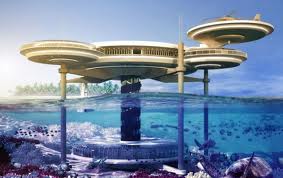
Previously, our heroes succedded in getting rid of the mutated giant squid that attacked the Gallian Pipe which the two men were using to descend down to Articus.
They cheered in joy as the black hawk(The giant squid) was down and out after a tremendous electro-shock.
Now, since the Gallian pipe was detached from the entrance of the Articus base, it needed them to create similar atmosphere under which the entrance of the base opens up on recieving the appropriate matches from the elevator.
Our heroes equipped with a BubbleCommander device, BubbleMarine,a few weapons and last but
not the least a reasonable grip in codes and program compilation.
Edwards pointed out that the gateway of Articus base will only open if it meet four mandatory conditions namely pressure exerted by gallian connectivity, temperature generated by the descend of gallian elevator, the electric maintainence and acknowledgement signals.
Victor: Hey Jason, heads up. Do remember that you have only fifteen minutes of power in your BubbleMarine and a trifle reserve backup of only ten minutes or so. Try and accomplish coding compilation within the stipulated time with a urgent sense of emergency.
Jason: Edwards and I shall do the necessary bit. I hope what I have learned in my past days come to my rescue.
Edwards: Yeah, or else we are doomed.
Victor: Keep your cool guys, Jason please proceed with main program procedures.
I know Edwards is good at debugging and I am sure he will be of great help to you Jason.
Jason: My goodness, realise this Victor compiling and coding while in water is not as easy
as it would have been sitting in an air-conditioned cabin.The hydro pressure is tremendous here. I fear I might catch an ache.
Victor: Relax Jason. Please mark my words carefully.
Firstly, you need to code for pressure exertion.The Gallian pipe connector to the Articus Base uses a special sensor that will sense the exact pressure needed to detect a Gallian incoming connection. Since the Gallian pipe is damaged, connecting the damaged Gallian pipe will do no good.It needs to be repaired.The Gallian pipe
runs internally through a G-Nxt language.We need to repair the pipe's backbone structure first.
Jason: Yes, I have actually worked on G-Nxt. It's not so simple but I am willing to drive into complexity.
Victor: I am forwarding the G-Nxt code for automated gallian repair.
Victor forwarded the code to the BubbleCommander device.
The code is as follows.
--Initialise
Procedure Gallian Repair()
Mode:=Automatic
detection var_damage:= Error when structure damage response is TRUE
step_function:= impulse function within step.Range(min(pot.diff) : max(pot.diff))
detection var_power:= Error when structure pot.diff > step function
setup auto repair
call standard function REPAIR
END
go to INDEX
Victor: This code is just for handling structural damage to the Gallian and not meant for handling multiple damage. You need to maintain proper current flow through the pipe and hence utilise the condition for potential difference wisely.
Jason: I understood Victor. Thanks for assistance.Please reply if the standard call function
'REPAIR' is functioning properly.
Victor: Yes, it is functioning properly. Please note that the basic framework of the Gallian pipe are building blocks called GCells. Generally we detect points of error within the Gallian structure by writing procedure for detecting errors from the first GCell to the last one. I hope this helps you.
Jason: It sure will.Edwards, have a nice look on this code.Suggest me some modifications to
address our needs.
Edwards: The code is endowed with deep complexity.I think this is scripted in version.2 of G-Nxt language.Let me restructure the code for you.
Edwards started compiling.
--Initialise
declare last_counter:=max(GCell)
points array_list%Type
Procedure Gallian Repair()
Mode:=Manual
loop through and repeat
from i=GCell[1] to GCell(last_counter)
detection var_damage:= Error when structure damage response is TRUE
select detection var_damage into points
print.output(points)
setup auto repair where GCell in points
call standard function REPAIR
END
Execute block in Indexed mode
RUN;
When Edwards triggered the above compilation, the code started running and listed out all the GCells that were attacked by the Squid's violent ambush.
Jason: I think the auto REPAIR procedure has done wonders repaired all those GCells which were severely damaged.Now the next challenge is to build a potential
difference which allows step uniform current flow throughout the structure.
Edwards: I think I know what is to be done. The power flow in the Gallian cell is such that between any two GCells the difference in potential is constant.
Hence the distribution of potential through the cell will not be a herculean task.
If the number of GCells is 'x' and potential in first is 'k', then at the xth GCell it will be 'xk'.
Edwards quickly composed a code.
--initialise
declare last_counter:=max(GCell)
Applied.potential=min(GCell.Power.Rating)
procedure uniform_power_distribution()
for i = GCell[i] to GCell(last_counter)
set GCell[i].pot.value=Applied.potential
Applied.potential=Applied.potential+Applied.potential
end looping
Begin
if max(GCell)*min(GCell.Power.Rating)=Applied.potential Then
GCell(last_counter):=Applied.potential
Else EXECUTE procedure uniform_power_distribution AGAIN
END
Execute block in Indexed mode
RUN;
When Edwards ran this code the potential started distributing itself in an uniform manner across the GCells.
Victor: I checked the potential at the last GCell and the power absorbed at the initial GCell at my base. The potential at last GCell is exactly what it should have been. I shall now connect the end point of the Gallian pipe to the entrance of the Articus base.
Victor slowly increased the strength of the current through the Gallian pipe but only within its walls so that the increased current strength do not shock the two men.
As the water was less salty current conduction was very low.Now due to the heating effect of the current send, the temperature at the base of the Articus rose and soon it reached the temperature required at that junction. Victor conveyed that they had achieved three conditions. Both Jason and Edwards was delighted.
Now Jason and Edwards entered into the Gallian elevator through the emergency exit.
Jason: Now how do we increase the pressure at the base of Articus entrance?
Victor: The elevator have mechanical pegs. On triggering a command it will start bombarding the entrance base of Articus and hence increase pressure.But it should be noted that the entrane is very sensetive to pressure exerted and it should be within +1% or -1% of the exact pressure required. The pressure required is about 10Mpa and after the temperature is highend, the pressure requirement may rise and must be applied accordingly.
Jason: I had previously studied in the Gallian manual that the Articus base requires a bit more than 10Mpa to allow the elevator into its territory.Since pressure is a direct variant of temperature here.The pressure required according to manual is :-
P=Gallian.Constant*(Applied temperature - surrounding temperature)/{delta(Applied temperature)-delta(surrounding temperature)}.
Edwards: Oh the expression looks pretty complex.
Jason: It's my time to try now. Fortunately, my BubbleCommander device recorded the final temperature and surrounding temperature at the present and at ten minutes prior to comilation of the REPAIR procedures. There was a marginal rise in temperature in both the scenarios.
Quickly, Jason composed the following lines
--initilise
Process bombardment()
declare dimensions
surr_temp1 temperature%Type:= 15
surr_temp2 temperature%Type:= 17
app_temp1 temperature%Type:= 25
app_temp2 temperature%Type:= 28
Pressure Pressure%Type
Begin
Pressure=Gallian.constant(app_temp2-surr_temp2){(app_temp2-app_temp1)-(surr_temp2-surr_temp1
)}
[which evaluates to
P=Gallian.constant*(28-17){(28-25)-(17-15)}=10MPa*11=110MPa.]
REPEAT Bombard.Process until
Pressure-0.1*Pressure<=Process.Pressure<=Pressure+0.1*Pressure
while(Process.Pressure
END
EXECUTE bombardment
RUN;
When Jason ran this code, the pegs of the elevator started bombarding heavily for both men knew achieving about 110 MPa would take some time.Within five minutes the desired pressure was achieved and the Articus entrance allowed the elevator into its ecosystem.
Finally Jason and Edwards emerged out of the elevator and breathed artificial oxygen.They were delighted to be inside the scientific marvel known as Articus.
Points:
Time spent:
IP address:
Canary word: Present
Possible AI signals:
Original Text:
Are you sure you want to delete this comment? This cannot be undone.
Mark this comment as a review? Points will be awarded to the poster.
Your comment was posted, but it wasn’t long enough to count as a review. Reviews need about four complete sentences (at least 250 characters). Try writing another review that explains your thoughts in more detail — the author will appreciate it, and you’ll earn points for it.
140,812 Literary Works • 673,694 Reviews



Hey Rikki!
Oh, the squids are called Black Hawks? I thought you were making a reference. It doesn't make too much sense that they are called Black Hawks though.Back again for Chapter seven. I really don't get this chapter, so I'll just make a quick review, as I have now gone through all of them so far.
I'll comment as I read:
Now, this sounds pretty interesting. Dedicating an entire chapter to them trying to open this door using their knowledge of code and having to hack their way in is pretty cool. It is however botched though, I'll elaborate when I get to it.
You really need to fully explain what this means if you are going to include it. The reader has no idea.
Edit
Okay, now we're at what takes up most of this chapter: Coding.
I'm not to comment on any of it, mainly because I don't understand it. I have a feeling you don't know coding, so this is all gibberish. I will however say that this is completely unnecessary to the story and it looks terrible. Don't outright show the coding, just tell the story as they are working on it.
Alright, moving on:
Edit
Edit
Edit
Why was it less salty though. If the water entered the pipe when it burst, wouldn't it still be saltwater? What happened?
Edit
Great, finally they arrive at this place. I guess we'll also finally see Jane then? We're getting somewhere.
In all honesty, this entire chapter is something the story could do without. The only thing that happens is that they hack their way inside. Which is cool. But wasting this much time on it is unnecessary, and definately don't write this much 'code', if any at all. The reader doesn't need it. I'm not reading a Michael Crichton novel here.
See ya in the next chapter. Keep it up!
Cheers
Birkhoff
Ehhh... As mentioned below, it would be kinda nice to actually know what is happening XD I know C++ and stuff, but this language seems weird. (Plus there's that code on top o.o)
Anywho, its an interesting experiment, but visibly not for the common reader. Is this some analogous tech tutorial? ^^ I've seen similar done in a book on AI in the form of a dialogue, although with no code.
I assume that in 3000 B.C. the coding conventions will not be same as the present century.It was an imaginary hybrid coding script.
There are better ways to show it off ^^
Kindly illustrate
sorry, it is 3000 A.D. and not B.C.
Well, that makes more sense.
Well, you don't have to fill half the book with code to prove someone is a programmer. Describe it through their actions and stuff,
This is almost entirely dialogue with very little description. The structure of your sentences and the huge amounts of dialogue you use is confusing at best and it just doesn't sound like how real people converse. A good tip I use is to read out conversations like a script (which your piece is perfect for), which makes it easy to identify when certain sentences don't fit with the normal flow of a conversation.
I think you wanted to show off your knowledge of basic coding, but it really serves no benefit to the story whatsoever. The code is just a huge wall of meaningless text to the reader and doesn't enhance the story or the characters. Why not instead talk about the pressure Jason felt whilst compiling as he slowly ran out of oxygen, or how difficult it was to see though the water. Tell us about Jason's emotions, don't bother showing us the code.
Overall, I think I would find it extremely difficult to read all the parts of this work. The script style writing and heavy dialogue is quite confronting and isn't viewer friendly. The ideas and concepts you have in this story are really good, and I enjoyed your knack for technical detail and precision, but I think it could be used better.
All the best with your future writing and Merry Christmas.
What basic coding? These were introduced to illustrate the technical expertise of the two men. They work in labs and are no commoners,hence introduced imaginary coding script that might be used in distant future as far as 3000B.C.
3000 B.C is over 5000 years in the past. Also, the code you've put in here is still a massive wall of meaningless text. If you want to illustrate the technical expertise of these characters, illustrate it through words. Don't lump a whole bunch of imaginative code onto the page and think that it explains anything to the reader, because it just doesn't.
Sorry, it is 3000 A.D.
I still think you're missing my my point, but all the best.