
Many years ago, in a village surrounded by verdant mountains, there lived a blacksmith named Marius. He spent his days hammering away diligently in his smithy and drinking merrily with his friends at the pub after work. The tools and weapons he forged were all of the highest quality, which earned him the respect of the other villagers. Although he wanted to expand his business, his smithy wasn't large enough to handle mountains of new work orders, and despite the constant demand for his products, none of his fellow villagers were interested in becoming blacksmiths or working at a smithy themselves. Marius had no children who could learn his trade either, so there was no one who could help him around the smithy. He therefore continued to forge excellent ironware while trying to be content with his current workload.
On the day before the harvest festival, Marius was walking down the mountain path carrying a basket of apples on his back. As he was nearing the mountain's base, he came across a magnificent bird lying on the ground. It was a creature unlike any other he'd ever seen before, with fiery red feathers, a shimmering gold beak and talons, along with a pair of piercing blue eyes that seemed to stare right into his soul as he marveled at the bird. He couldn't tell if it was hurt or merely resting, as it was impossible to notice any bloodstains on its crimson plumage. The bird lifted its neck slightly, and it seemed it was gazing hungrily at the apples Marius was carrying.
“Would you like one?” the blacksmith asked, taking a large apple from his basket and holding it out towards the bird.
To his amazement, it nodded its head earnestly as if it understood his question. When he set the apple down in front of it, however, it stared at the fruit for a while before turning its eyes towards him again. Marius could almost swear the bird looked annoyed, though he wasn't very good at reading the facial expressions of animals.
“Could it be you want me to cut this apple into slices for you?”
The bird nodded again in response to his question, and he chuckled as he took out his knife to begin slicing the apple for the bird to eat.
“You're quite the spoiled little featherball, aren't you?” he said, laughing at the indignant squawk the bird let out.
Marius could only imagine how hungry the bird felt, considering how it was accepting food from an unknown human so easily. In the end, he cut up three whole apples and placed the slices on some leaves before serving them to the bird.
“I'm afraid I brought no plates, so I hope these leaves will do. Enjoy your meal, little one,” he said kindly.
The bird was admittedly too large to be called “little one,” but there was something about its guileless demeanor which caused Marius to treat it like a child. He waved goodbye to the bird as it happily ate the apple slices and continued making his way back home. That evening, while sharing drinks with his friends at the pub, he told them all about the red bird he saw on the mountain earlier, and he asked his friend Cornelius, who was a bird enthusiast, if he knew anything about it.
“I've never heard of large red birds living in the mountains around here.” Cornelius looked very thoughtful as he spoke. “However, I've read a few stories about a bird with red plumage, a golden beak and talons, and blue eyes. It’s called the phoenix, if I'm not mistaken.”
“The phoenix? Isn't that the immortal bird said to revive from its own ashes after death?”
“The description you gave matches what the legends say about the phoenix’s appearance.”
“No way.” Marius shook his head. “The bird I saw can't possibly be the phoenix. It behaved nothing like a legendary creature, more like a hungry sparrow.”
“There's nothing that says the phoenix can't act like an ordinary bird, especially when it’s hungry.” Cornelius laughed at his friend's disbelief. “If your feathered acquaintance really is the immortal phoenix, chances are good things will start happening to you in the near future.”
“All I did was feed it some apples. I doubt I'll be rewarded for that,” said Marius, shrugging his shoulders.
It wasn't as if he fed the bird because he expected anything in return. He just felt sorry for it, and truth be told, he thought the bright red ball of fluff was too adorable to ignore. A part of him wished he could've brought the bird back to the village with him, but he firmly adhered to the rule that wild animals should stay in the wild, even though he wanted to keep them as pets sometimes. If the bird from yesterday really was the phoenix, Marius hoped it would remain free from humanity's clutches.
The next evening, Marius was singing and dancing with the other villagers around the bonfire lit up for the harvest festival. Tables covered with seasoned meat roasts, freshly baked bread, and juicy red apples surrounded the joyous revelers. The yearly harvest festival was always an opportunity for everyone in the village to spend time together and have fun. As Marius sat down on the grass, feeling happily exhausted from celebrating with the others, he felt someone gently tug at his sleeve. When he turned to see who it was, his eyes met those of a little girl, around six or seven years old appearance-wise. Her hair was as red as the blazing festival bonfire, her eyes were bright blue, and she wore a green dress embroidered with golden thread.
“Hello, mister. My name's Lucia,” she said to Marius cheerfully.
“Hello, Lucia,” replied Marius, who felt puzzled by this sudden greeting.
He wondered if the child had wandered away from her parents, but when he asked her if she was lost, she shook her head. She then told him she had no parents and also had no idea where this place was, which alarmed Marius greatly. He quickly took Lucia to the village chief and asked him to help the little girl find a kind family to stay with. The chief remarked he'd never seen her before, and he was also very concerned when he heard she was an orphan who’d apparently ended up in his village by accident. He assured Marius he’d make sure the child was well cared for and tried to lead her to the village church, but she stubbornly refused to go with him.
“I want to stay with this mister,” she declared, running back to Marius and latching onto his arm.
Marius had no idea why Lucia wanted to stay with him, and he kindly but firmly told her she needed to follow the village chief, so that the elderly man could find a nice family who'd take her in. However, the child wouldn't let go of his arm and kept insisting on staying with him. After failing to change the little girl's mind, the village chief asked Marius if he could stay over at the church tonight with her. The clergy members would prepare rooms for them to stay in, and as the deaconesses’ quarters would be right next door, Marius could easily call out to them for assistance if needed. Lucia started to cry when Marius tried to turn down the chief's suggestion, so the blacksmith ended up agreeing to watch over her at the church for the night.
Once Lucia was safely tucked in bed, Marius sat in the chair next to her, intending to go to his own guest room after she fell asleep. The child, however, refused to let him go anywhere until he agreed to sing a lullaby for her.
“I heard you singing with the others around the bonfire, mister. Do you know any good lullaby songs?”
Marius awkwardly sang a few lullabies his mother used to sing when he was a child, though he thought his deep voice didn't suit the songs at all. Despite his doubts, Lucia seemed to like his singing, and she'd dozed off by the time he finished singing the last lullaby. Marius smiled as he quietly opened the door to leave. He was relieved she was able to sleep peacefully, after all the painful experiences she must've been through as a child with no parents. Though the chief confirmed Lucia was a new face in the village, Marius wondered why her appearance felt so familiar to him, as if he'd already seen her before.
For a moment, the image of the red bird he saw yesterday came to mind, and he found it interesting how the colors of Lucia's hair and eyes matched those of the bird's feathers and eyes, though he didn't think it was too strange. After all, there were many children with red hair and blue eyes. He remembered what Cornelius had said about the phoenix, but the idea of Lucia being connected to the legendary bird in any way felt ludicrous to him. She seemed like an ordinary child with no fire or self-resurrecting powers whatsoever. He had to admit, however, that both Lucia and the bird he saw were somewhat demanding in an innocent way.
“If she really is the bird I met yesterday, I bet she'll want her apples sliced and served on a fancy plate,” he said to himself jokingly.
Regardless of her origins, she was clearly fond of Marius. He wished to help the little girl find a family capable of raising her with love. The next morning, during breakfast, he told Lucia they were going with the chief today to introduce her to the rest of the village. He assured her several of his friends were kind-hearted parents who’d gladly accept her as their new daughter. She refused to go, however, and once again insisted on staying with him.
“You can be my family, mister,” she said confidently.
Marius didn't know how to respond to this. He'd never seen himself as a parent, and he wasn't sure if he could raise Lucia properly, but before he could say more, the child expressed her wish to visit his smithy. The chief had mentioned it yesterday, and she really wanted to see the place where he worked. Despite his concerns about her refusal to live with anyone else besides him, he thought it'd be a good idea to let her see his smithy. He'd possibly be introducing her to a future career path by showing her around a blacksmith's workplace, though he decided not to use the furnace today, to avoid risking the little girl's safety.
It was still early in the morning when they reached the smithy. Lucia seemed very interested in the tools on his work table, such as his hammer and tongs, and she examined his anvil with just as much curiosity. For her own safety, Marius had strictly warned her not to touch any of his work tools, and to stay away from the furnace even though it wasn't lit. He told her she could help him with his work when she was older if she felt interested, but right now, she was prohibited from doing anything inside his smithy besides looking around. Seeing her disappointment, however, he relented a little and let her play with some horse-shoes and saucepans he made.
Lucia then asked him how blacksmiths actually made things, and he tried to explain the process as simply as he could. He talked about how blacksmiths would first heat up the iron in the furnace, and when the iron was red-hot, they would hammer away at it on the anvil to make various items, such as horse-shoes and swords.
“So you put the iron in the fire, and when the iron's hot enough, you can make stuff with it?”
“Simply put, yes. After the forged items are cooled and polished, I treat them with oil or wax to keep them from rusting, and then they're given to the customers who ordered them.”
“That must take a long time.”
“It's a time-consuming process, but that's what makes a blacksmith's creations so important.” Marius couldn't help but feel rather proud of his work. “Even if they aren't easy to make, people still need them. It's my job to forge the products that my customers ask for to the best of my ability.”
“Would it help if you could forge stuff by hammering the iron just three times after heating it up for no more than a minute?” Lucia asked earnestly.
The blacksmith chuckled at this unexpected question as he replied, “That’d be quite the dream come true. If I had that sort of miraculous power, I could accept as many work orders as I want, and the villagers would receive the iron products they need without having to wait for days or weeks on end.”
“So everyone would be happy if you had that special forging power?”
“Certainly, but adults shouldn't wish for the impossible. Things like that are possible in the imagination of children like you, however.” Marius patted the little girl on the head. “You should have as much fun dreaming as you can at your age. Think about the many things you might want to do as an adult, and I'm sure you'll find the path that suits you best.”
Lucia beamed as she replied, “Alright, mister.”
She and Marius continued to spend a lot of time together over the next few weeks. At the blacksmith's insistence, Lucia stayed over at the church every night, where the deaconesses could take good care of her, but the child would go to the smithy every morning and stayed there until it was time to return to the church for dinner. Though she was still prohibited from going near the furnace, she managed to convince the busy blacksmith to let her help out with small tasks, like fetching buckets of water or bringing jars of wax for him to treat his finished products with. Marius grew to care for Lucia as if she were his own child, and Lucia in turn kept asking him to become her father. The village chief also thought they could live happily as father and daughter, seeing how much they enjoyed each other's company. However, Marius still thought Lucia would be happier with a mother, father, and siblings than with him. He felt completely disinterested in marriage, and he possessed hardly any experience in childcare. Lucia was the first child he’d ever looked after on a regular basis up until now. Her cheerful and innocent demeanor had endeared her to the other villagers, and he thought she would eventually agree to live with one of the families who doted on her instead of him.
One particularly cold afternoon, Marius thought it'd be better to allow Lucia to approach the furnace in his smithy, as she might catch a cold otherwise. The little girl was excited to finally get a closer view of the burning furnace, though she made sure to far away enough for Marius to not feel worried. While watching the flames burn orange and red, she began to hum a song Marius never heard before. It was a calming type of melody one might hear shepherds play for their flocks in the grassfields.
As she continued to hum, the fire in the furnace suddenly formed the shape of a bird, much to Marius's surprise. It only lasted a few seconds before the flames turned back to normal. Marius wanted to ask Lucia if she'd seen the bird's shape in the fire too, but the child looked so unperturbed that he thought he must've imagined the strange vision. Soon afterwards, she stopped humming her song and turned to look at him.
“I want to see how you forge things. I'll stay far back, so could you start heating up the iron in the fire?” she asked, looking more serious than usual.
For some unexplainable reason, Marius felt as if he should fulfill this request. After making sure Lucia was standing a good distance away, he held up a piece of iron with his tongs and held it over the furnace’s flames. Only a minute passed before Lucia suddenly asked him to place the iron on the anvil and strike it three times with his hammer. Marius was baffled at these words, but he did as she requested. He hammered the piece of iron three times, and seconds later, the iron turned into a sword, perfectly forged and ready for use. Marius nearly dropped his hammer in pure shock and awe at this miracle. Lucia walked over to the stunned blacksmith and smiled proudly.
“Now you can make iron stuff as much as you want, mister,” she said.
It was impossible to deny Lucia's true identity now. She was the phoenix bird of legend, and her magical fire now burned within Marius's furnace. All Marius had to do was place the iron pieces in the furnace for a minute, strike them with his hammer three times, and he could create any iron product he wanted. Hundreds of iron items could be made by him within a single day if he so wished. Once the initial shock had worn off, Marius was absolutely thrilled by his new forging ability. He hugged Lucia and thanked her profusely for this fantastic gift.
From that day forward, Marius forged countless pieces of iron into swords, cooking pots, and many other kinds of products using his enchanted furnace. The villagers were very surprised by the dramatic increase in his work output, and as the village was small, it didn't take long for rumors of the phoenix’s fire blazing in Marius's furnace to spread throughout the whole community. Fortunately, the villagers weren't too alarmed by the presence of the phoenix in their midst, though they were understandably a bit worried at first. They came to greatly appreciate the speed at which they could receive their iron products thanks to Lucia's fire and Marius's tools. If a new horse-shoe was needed, it would be forged and delivered to the buyer's house in half an hour or less, depending on where the buyer lived. If an old kettle needed mending, the customer only had to wait in the room next to the smithy for a few minutes before receiving the repaired kettle from the blacksmith.
Marius himself felt indescribable joy over his booming business. The money he currently made in a day was more than what he used to make in an entire month before receiving his new ability. Even after lowering the cost of his services to match his current work efficiency, he still managed to earn a vast fortune by the end of winter. As he was now wealthier than most of the other villagers, he thought he'd be able to give Lucia a fulfilling life even without a mother or siblings, and he officially adopted her as his daughter. He bought a beautiful house a short distance away from the smithy, where the two would start their new life together as father and daughter.
Every day after work, Marius would take Lucia on hikes around the mountains, where she used to live as a phoenix. Lucia loved to visit her old home, though she assured her father she also loved her new home in the village. In the evenings, they would sit together at the table for dinner, which Marius, who was a good cook, would prepare himself. Lucia's true age forever remained a mystery, as the girl herself didn't know how old she actually was, but still, he thought she should attend school with the other children, who already knew of her identity as the phoenix bird. He therefore had her start school in the middle of spring, donating huge sums of money to the school every month to make sure she and her classmates would receive the best education. He also donated money to every struggling family in their village and several neighboring settlements, in order to teach his daughter the importance of helping others in need. Lucia made many friends at school and also supported Marius as best as she could. On Marius's birthday, she gave him a pendant she secretly made herself. She told him she used her phoenix fire to heat up the metal, but she forged the pendant from it without relying on her magic powers, since she wanted to give him a gift she truly made all by herself. Marius hugged her and said this was the most wonderful gift he ever received. He promised to treasure the pendant always. For a while, everything seemed to be going well for the newly established father and daughter household.
One autumn evening, however, about a fortnight before the return of the harvest festival, Lucia seemed to be in very low spirits. She wouldn't finish her supper, didn't talk about how her day at school went, and went to bed hours earlier than usual. When Marius asked her what was wrong, she was reluctant to answer him at first, but she eventually told him what was troubling her. Living as an ordinary human in the village had weakened her power as the phoenix, and she was afraid her magical fire in Marius's furnace would begin to burn out soon. If that happened, she was scared her father would no longer want her around.
“Would you still love me even if I'm not useful anymore?” she tearfully asked Marius, who wrapped his arms around her in a warm embrace.
“Of course I'd still love you.” He patted her back comfortingly as he felt her tears soak into his shirt. “You're my adorable daughter, now and forever.”
He then asked Lucia worriedly if her weakening powers would negatively affect her health. The little girl assured him she was feeling perfectly fine, and losing her phoenix magic would only make her an ordinary child just like her friends. She preferred her normal life as a human over her immortal life as the phoenix, so as long as Marius was fine with it, she didn't mind losing her magical abilities. In truth, Marius never expected the phoenix’s fire to keep burning in his furnace forever. He'd carefully saved up money and made wise investments over the past year to ensure he could keep providing for his daughter even if her magic disappeared. He hoped her fears of not being loved by him anymore if she lost her phoenix powers would fade away quickly.
The following afternoon, he consulted the village chief about his daughter's weakening magic, feeling concerned over how the other villagers would react to the sharp decrease in ironware after the phoenix’s fire stopped burning. The chief told Marius not to worry, since he would strictly forbid them from pestering him or his daughter about the matter. He also revealed the mayor from the nearest city was coming to their village in a few days to discuss possible trade agreements. If the talks went well, their village could import ironware from other regions without relying solely on Marius's smithy for the items. The blacksmith was relieved to hear this, never imagining the ordeal that would soon arise from the mayor's arrival.
When the mayor and his officers finally reached the village, they were greeted by the chief and led to his home to discuss business. The moment they sat down at meeting table, however, the mayor startled the chief by saying he wished to buy the phoenix that was said to live in the village. He claimed he heard rumors of the phoenix’s magical fire that allowed blacksmiths to forge weapons and other iron products within minutes, and he would pay the village chief a great sum of money for the legendary bird. At first, the chief tried to deny the existence of the phoenix, but the mayor already seemed to know the true identity of the blacksmith's daughter. He told the chief there was no use in lying, and he meant to possess the phoenix one way or another. If the chief refused to sell her, then the mayor would have his men drag her out of her house by force. None of the villagers could stand a chance against the mayor's military-trained officers in combat. Marius was a very strong man, but even he was unable to defeat the gang of fighters that stormed into his house to kidnap his daughter. Fortunately, Lucia had left home earlier that morning to volunteer at the church, but she was going to come back soon.
Marius angrily told the mayor's officers there was no point in capturing his daughter, as her phoenix powers were weakening, and her magical fire would cease to burn in the near future. In response, the officers coldly stated they would force the phoenix bird to keep her fire burning by whatever means necessary, and if she ended up being useless, they would kill her to see if her subsequent revival would restore her powers. Marius roared in fury as he charged at the officers, but he was punched in the stomach and then shoved headfirst into the ground. One officer pulled out a knife and threatened to kill Marius if continued to resist.
“You will not harm my daughter,” he declared with all the strength he could muster in his injured state.
His answer was enough for the officer to stab the blacksmith right in the chest. As soon as the blade pierced Marius's skin, however, there was a huge uproar coming from outside. When the officers ran out to see what was happening, they were immediately knocked over by violent blasts of wind created by the phoenix’s great wings flapping midair. The fiery red bird let out a terrifying screech, and after swooping down to grab the mayor's officers with her vicious talons, she flung them all the way to the chief's house on the other side of the village, where the mayor still was. Although she wanted to kill them all, she begrudgingly cast a spell that prevented the officers from dying even if they hit a hard surface, so that Marius wouldn't become a murderer’s father.
After reverting to her human form and running into the house, she found Marius lying on the floor with his hand on his chest. She rushed over to him in a panic and tried to see where he'd been stabbed. With her keen senses, she'd witnessed and heard everything during Marius's final confrontation with the officer.
“He wouldn't have stabbed you if you didn't say anything, so why did you?” She started crying as she clung to her injured father. “I thought if my phoenix fire could help you with your work, you'd let me be your daughter, but I only ended up being useless. Not only that, but I couldn't save you even after regaining my full power just now. I'm sorry, father. I'm so sorry.”
“Don't cry, Lucia.” Marius gave Lucia his warmest smile. “You've always been helpful to me, with or without your magic. I never learned how to love someone more than anything until I met you. Becoming your father was the best decision I ever made in my life.”
“Please don't die, father. Don't leave me alone,” the little girl begged him through tears.
“Lucia, calm down. I'm not going to die.”
“But you were stabbed.”
“No, I wasn't. See?”
Marius lifted his hand to reveal he'd only been cut slightly, and his chest wound was nothing serious. He told Lucia the metal pendant she made for him managed to block the blade from fatally stabbing him just in time, and the reason why he couldn't get up was because the officers had given him a serious beating, though his life was in no danger.
“You did end up saving me after all.” He held up the pendant for his child to see. “I most certainly have the greatest daughter in the entire world.”
Later that day, the mayor and his officers were forced to leave the village after Lucia gave them a sound thrashing in her phoenix form. They were warned to never come back, as the phoenix and the villagers would show no mercy if they ever tried to stir up trouble again. Apparently, the mayor no longer saw the phoenix simply as a bird to be captured and used for constantly making ironware. He calmly accepted his failure and headed back to his city without protest. Marius wondered if it was wise to let the mayor and his men go just like that, but the village chief said they would become even more troublesome to deal with if they stayed any longer.
Now that Lucia's magic was fully restored, the village didn't have to worry about their ironware production decreasing any time soon. It seemed her waning powers had been due to the child not assuming her phoenix form for nearly a year. Lucia confessed she didn't want to scare away her father and the other villagers with her true appearance, which was far more imposing than her appearance when she and Marius first met on the mountain. She also feared she wouldn't be able to live as a human anymore if she took on her phoenix form again, but this fortunately turned out to be a false assumption. The whole village had been awed by the appearance of the phoenix in her full glory during her confrontation with the mayor's officers. They encouraged Lucia to fly around in her bird form more often, to let enemies know their village was protected by a powerful bird of legend.
At the request of her friends, Lucia transformed into the phoenix again before their eyes, much to their amazement. The flames burning along the edges of her wings blazed brightly, matching the brilliant sheen of her golden talons and sapphire eyes. Her crimson plumage and the mystical aura emanating from her entire being made her appearance seem even more majestic than the descriptions given in legends of the phoenix. The village children could hardly believe this magnificent creature was really their friend, and they expressed their disappointment over how Lucia hadn't shown them her phoenix form sooner.
Marius's prosperous business allowed him to keep donating very generously to those in need on a regular basis, and Lucia grew up to be a woman known for her compassionate disposition. The father and daughter continued to love and support each other for many years to come, knowing no matter what challenges came their way, the two of them could overcome them together without fail.
Points:
Time spent:
IP address:
Canary word: Present
Possible AI signals:
Original Text:
Are you sure you want to delete this comment? This cannot be undone.
Mark this comment as a review? Points will be awarded to the poster.
Your comment was posted, but it wasn’t long enough to count as a review. Reviews need about four complete sentences (at least 250 characters). Try writing another review that explains your thoughts in more detail — the author will appreciate it, and you’ll earn points for it.
141,299 Literary Works • 674,334 Reviews




Next story in the list :3 Hia again!
I mean, he never really asked her to be the magic flame to his oven after all. So all that would happen if she were to lose her powers and become fully human, that they would go back to how things were and that wasn’t a bad state. You failed to show why expanding the business was necessary so… I’m not sure why this kid is even worried.Hmm I wonder why Marius feels the need to expand his business? It sounds like a very modern thought. The infinite growth thing. I thought he would be happy the way things are---and maybe worried abt not having an heir. That sounds like a reasonable problem.
Hmmm I feel like the dialogue is a bit too on the nose in the tavern. They immediately jump to the right conclusion, feels rushed :3
It also feels… very convenient that the bird girl shows up immediately. I know you have Marius go on a tangent about “could this be phoenix? Nooo that’s not possible….” But I don’t feel having him musing over it improves things.
I do think that her just showing up in narration like that is a very fairy tale thing to do tho =D
I kinda have the feeling that a fairy tale tho would have skipped the “let’s find her a new home” phase and just went with “I guess she lives in the smithy now”
Hmmm I understand the part about wanting have a less demanding job. Blacksmithing is extremely difficult and hard on the body. But I don’t really like the message that this is all in service of mass producing even more goods. It feels so… consumeristic.
I kept waiting anxiously for the other shoe to drop. To find the conflict in this fairy tale.
Aww that is very sweet:
I think you spend so much time on the family fluff that the sudden drama at the end doesn’t really have time to shine and comes completely out of nowhere. It also feels like… you want to depict a rather old-timey society without properly looking into how these societies are structured and what they prioritized. I mean… it’s your fantasy world but I’m kinda sad how much it already reflects modern sensibilities—including those that are worse than what came before ☹
I feel like nothing much happens in this one and I’m also not sure what the lesson of this fairy tale is: make sure you have a good child that is magic so you can become a large business owner?
PS: I do love that it was her pendant that saved her father :3
Thank you again for your review! There is no particular moral lesson in this short story. Marius wants to expand his business largely because he hates having to keep the other villagers waiting to get the products they really need for a long time. He's also worried about who can work as the blacksmith when he can't work anymore, since he's the only blacksmith there. He and Lucia are trying to forge as many iron products as they can so that the villagers will have enough to last them at least until another source of iron products can be found in case Marius can't work anymore. I will go into more detail about their motives if I decide to write more stories set in the Cat King universe in the future. This short story collection is pretty much a "test drive" for me to improve my writing. Your constructive criticism is very helpful to me!
Okay, hi! I'm finally back to review the second part of your story!
This is a nice opening. It's smoother than the opening of the other piece, but still keeps the fairytale quality.
This works nice to set up his character, but it relies heavily on exposition which makes the opening drag a little bit, since we need to be told all this information before we get into any type of action or dialogue. Maybe you could have a small scene of him talking about his work in the pub, and people showing no interest in learning?
A lovely description! Though it should be marvelled (with two l's)
I love the idea that he's talking to this bird. Is he maybe thinking the birds are similar to the cat people in the last story?
I think this all happens a bit too quickly. Maybe there needs to be a scene where the village chief and he discuss the case. I know we are told that in the previous paragraph, but I think we should be shown this through dialogue. Does the chief think its a good idea? Is he also confused as to why Lucia wants to live with him? Maybe they need to ask her about her parents more
I love this, bringing back the idea of the apples ensures the story feels fulled out and itsn't intent on rushing forward.
This section does a lot of telling. You should really have scenes that show some of the more important parts, like how she is cheerful and how she interacts with the villagers. Your writing is really good, but you risk the story becoming a series of events we are simply told about rather than experiencing ourselves!
This is so cool!!
Aww this is such a sweet moment!
I love the feel of this story. It truly feels like a modern fairytale, and I can see this being a Disney film for sure. I do hope you expand on it and add more scenes if you plan to turn it into a novel. Your writing is really strong but does rely heavily on exposition, so I think the main advice would be to tr weave action, dialogue and expostion together throughout the story!
I really enjoyed this <3
Thank you very much! I'm very happy that you think my short story could work as a film plot. I will try to improve my writing for other works I might create besides this collection.
An interesting story! When Lucia started crying after her father got stabbed, I thought you may make her tears cure her father since Phoenix tears are associated with healing ability in many mythologies(Greek and Egyptian to name a few!). That would be one more way she could have saved him. I marked a few spots where words were missing below.
A word missing here too but not sure what word. Maybe *move* far away?
Missing the word *the* here I think
Thank you for commenting! Your suggestions are really appreciated.
Hiii I see that this is part of perhaps a larger world, but I hope that doesn't hinder me from being able to give you some good feedback on this particular story. I don't see a lot of media about Phoenix's so this caught my eye the moment I saw it in the Green Room.
Lol me to my cats all the time. This had me thinking back on our animals and all the times I think "what is going through that nut's head?" because they're just cute fluff balls.
Ah, the Phoenix then. I will say, if it was only a day after meeting the bird, I would think Marius might be a bit more inquisitive and suspicious, but alas.
Yeah, no kidding Marius xD
Sure to stay far away. Alsos, I would change it to far enough away instead of "Far away enough". Flows more like how someone would say it.
Whoa. That's quite a power. I would like to see this explained in a bit more detail. If I was Marius, I feel like I'd probably scream a little and have quite a reaction to a hunk of hot glowing metal transforming straight into a sword.
I think this feels a bit weak because we never really get to see why Marius feels this way. You tell us that he has no family, but he does have a successful business, good friends, and a relationship with the mayor and the church, so it doesn't seem like there's any reason for why he should feel so insecure about giving love or raising a child. Obviously, taking care of a random child all of a sudden is a big task, but he seems to focus on learning how to love despite us never seeing him be anything but generous, kind, and thoughtful to animals, neighbors, and small children alike.
Ha, I really like this. There are a few things in this story that kind of come full circle, but I think this is the best example because it layers what was already a thoughtful piece and helps Lucia learn a lesson and see that she is useful, and that love helped protect the ones she cares for, it didn't hinder Marius or hold him back.
I'm not sure I buy that he would calmly accept failure. Begrudgingly? Sure. Angry but subdued so he doesn't get chucked across town? Sure. But there's a difference between calm and fear of chuckage xD
You have a fairytale type of writing style that I like. I recently Read King Arthurs and His Knights of the Round Table, and it had a very similar vibe. We don't focus too much on any details or descriptions unless they matter to the story. It's kind of a barebones way of telling it, but it does work with stories like this that feel more like retellings that get spoken for years and years where a lot of the less important details fall off over time.
I do think you could still use a bit more detail on the relationship though. Why does Marius feel so inadequate at first? When Lucia shows her powers is there any fear that she could burn down the village, or fears from Marius that people might come to take advantage of her? We see it with the bad mayor eventually, but it might be nice to see Marius proactively being concerned about it.
Why is Lucia so insecure? As a phoenix, does she not ever remember anything other than the fact that she is a rebirthing creature? Does that not make her more confident that she can always restart, or that she's been successful before and just needs to trust her instincts? I would've liked to see a bit more of them learning to love each other as child and father, but this is all just food for thought. Take from it what you think is good
~Messy
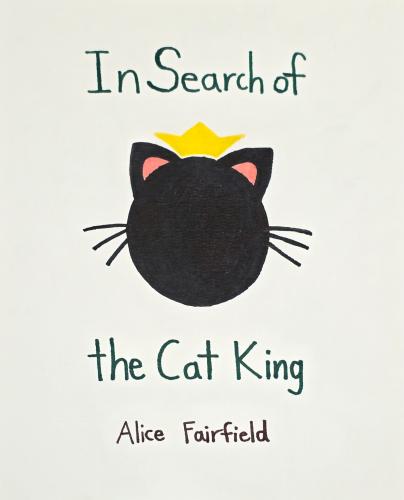
Thank you for leaving a review! This short story is the second part of my collection titled In Search of the Cat King, which contains 5 short stories in total. I created this collection because I wanted to write fairytale-like works and to find out how I can further improve my writing. One could call it a "test drive" of sorts. I will keep your suggestions in mind for my future works. Thank you again for your very helpful review!