
I can't stop thinking about rot,
or all things microscopic
that will writhe beneath our skin
when we lay limp and open to decay.
I promise not to harbour any hate.
I judge it part of me - of us.
Language, too, is part of us;
our words keep reaching for the rot,
invoking what disgusts us in our hate.
What would we say if we saw microscopic?
There are so many worlds inside decay,
but survival has us scrub it off our skin.
We slather sanitiser on our wasted skin,
annihilating all that isn't us,
waging war against our own decay.
Brilliant and hopeless. We will rot
despite all of our science, all our microscopic
vision, all our knowing and our hate.
What do I have to say about hate?
The worst of it is kept back by my skin -
and all microbiota, all my microscopic
selves are nothing to a system built (by us)
to separate and kill. Though we rot
it takes a system longer to decay.
And yet - and yet! - it cannot but decay.
This knowledge is the hope inside my hate:
that entropy exists, that all worlds rot,
that this life shall be shed like dried-out skin,
that there will be another way for us.
I know that if there is, it will start microscopic.
Nothing more real than what is microscopic.
Nothing more vivid than what is in decay.
We started out as cells. Now look at us!
Our beauty isn't cancelled out by hate;
some life survives the acid in our skin
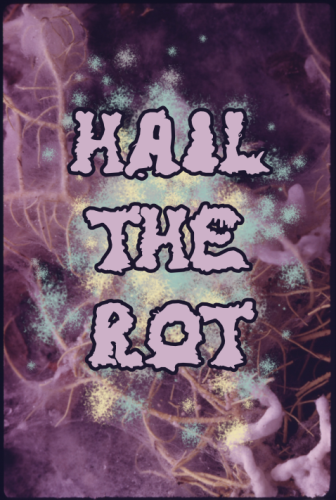
and all of us are dying. Hail the rot!
Points:
Time spent:
IP address:
Canary word: Present
Possible AI signals:
Original Text:
Are you sure you want to delete this comment? This cannot be undone.
Mark this comment as a review? Points will be awarded to the poster.
Your comment was posted, but it wasn’t long enough to count as a review. Reviews need about four complete sentences (at least 250 characters). Try writing another review that explains your thoughts in more detail — the author will appreciate it, and you’ll earn points for it.
141,951 Literary Works • 676,150 Reviews





I am in love with the sestina form that you chose here! the cycling words seem to make the transformation within this poem - from viewing the inevitable end of humanity as hopeless to celebrating the beauty of humanity despite what will happen in the end - even more climactic. You use the same words to express your thoughts in the beginning and then end, transforming decay into beauty! That really reflects the overall message of this poem - to view our decay from a different angle.
I especially love this quote from the poem. You're almost embracing the microflora that lives on you as your own identity through calling them your "microscopic selves". Therefore, I get the sense that you're criticising the way our society, built by its citizens, crushes its citizens, in the same way it tries to eradicate bacteria.
This bit is especially evocative. I like the juxtaposition between the limp body and the writhing bacteria. It makes decomposition sound invasive, almost violent, which of course contrasts with the final stanza:
This stanza is my favourite. The adjective "wasted" gives the impression that the "war", as you put it, is already lost before it has started. The line is very loaded with meaning - I really love it. We fight against decay, but decay is, of course, inevitable. And finally, the anaphora of "all of our" emphasises the sheer volume of defences that we have that will crumble before decay.
This poem is amazing, and if I had any criticism at all it would just be to wonder why you chose to not include an envoi at the end?