
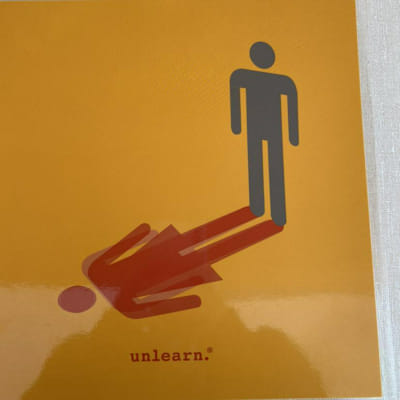
Unlearn to embrace the beauty of blurred lines
Bairn, just a child, who was given a duty that declines
The normalities of life like unconditional presumptions and essentials
Technicalities is all they were, so brainwashed full of assumptions from credentials
So willingly to believe they held value for the authorities
Only to receive unseemingly scars as being no ones priorities
Yet surrounding them was assortments of yellow
Full of light and happiness; where others' deportments were mellow
And nobody viewed them as robots or objects
Where their bodies were misconstrued and minds dissected for personal projects
In the air, the aftermath is beyond repair, but they must unlearn and feel
Questions and flashbacks will appear, yet someday they will heal
Points:
Time spent:
IP address:
Canary word: Present
Possible AI signals:
Original Text:
Are you sure you want to delete this comment? This cannot be undone.
Mark this comment as a review? Points will be awarded to the poster.
Your comment was posted, but it wasn’t long enough to count as a review. Reviews need about four complete sentences (at least 250 characters). Try writing another review that explains your thoughts in more detail — the author will appreciate it, and you’ll earn points for it.
141,446 Literary Works • 674,458 Reviews




Hi there! Lim here with a review.
General Impressions
The title “Unlearn” gives me the impression of a very serious poem, perhaps with social themes. To me, “unlearn” is a very sensational word nowadays since people are always talking about unlearning harmful patterns or beliefs. The image that you’ve used for inspo reminds me of signage. The figure with a distorted and ambiguous shadow seems to be what is referred to with the image “blurred lines”. Both the image and the poem convey a sense of tumult or turmoil. I can tell from the shape of the poem that it’s probably not a formal poem (i.e. not a sonnet, etc.) and more likely to be lyrics or free verse.
Themes
I think the poem describes a situation where an individual was treated unfairly throughout their life. “Bairn, just a child” occurs in the singular, which is why I say individual. There seems to be a theme of conformity vs individuality.
“given a duty” implies a lack of choice in the matter. Yet the duty also “declines . . . normalities”, which is an interesting turn of phrase. It seems like the duty itself does not conform to some broader standard, but the subject of the poem has to carry it out anyway.
I also thought there was a theme of oppression. The phrases “the authorities” and “no ones priorities” suggest that the subject of the poem wasn’t treated as having worth. Then the line “their bodies were misconstrued and minds dissected for personal projects” suggests dehumanization.
Imagery
Something that maybe could be improved is the imagery. I found it difficult to imagine what was happening in the poem for quite a lot of it. Abstractions like “duty”, “normalities”, “presumptions”, “essentials”, “value”, “authorities” are harder to picture compared to concrete images like “yellow”, “light” and “robots”, which are comparatively fewer in number here.
Of course, not every poem needs to have super vivid imagery, though I do think in this case it would help readers understand it more easily if there were fewer abstract concepts to focus on.
On the other hand, if the intent is to represent how the subject’s life is being abstracted into “technicalities” as the poem says, this may be a strength? It does make the poem less traditionally narrative or ‘lyrical’ (in the sense of a lyric poem, like a Romantic nature poem, etc.) since there’s no expectation for the reader to visualise the scene.
Structure
Something I was impressed by was the consistent rhyming at the end of each line. It definitely makes the poem sound better aloud, and also highlights interesting things. For instance, authorities/priorities emphasises that the subject is disenfranchised by the people in power. The rhyming also helps give that lyricism to the poem that helps it convey a certain frustration or intensity.
The one part that I had trouble reading aloud was:
“unseemingly scars” is an unusual phrase. I appreciate the assonance between re-CEI-ve and un-SEE-mingly but it does take me a few tries to read this line right through. The “as being” is also a sudden transition of sounds and grammar from the first half of the line, with the “b”. I’m not sure how “as” is meant here. Does it mean “scars (from) being no ones priorities” or “scars (like) being . . .”?
Overall
I think the main strength of the poem is that end-rhyme. I also liked the idea of “yellow/ mellow” as a contrast to the subject’s situation, as it’s a very extreme comparison, which makes it memorable and rhetorically strong. If you’re planning on revising this or writing more poetry in the future, my main suggestion would be to consider what’s the purpose of the poem (i.e. should the reader imagine and visualise? Understand easily? Or should they be befuddled for artistic purposes?) and edit the imagery and choices of words based on that.
Keep writing!
-Lim
Howdy hey! I’m here to give a review.
I really like the picture and I thought the poem perfectly represented it. I interpreted this as someone attempting to “unlearn” the values we’re taught by society (“technicalities is all they were, so brainwashed full of assumptions from credentials”). I think the line i just mentioned is talking about how people with more money or fame are seen as better than others.
I guess it was a little hard to read though (that’s not so much on you; i just have an attention span of -3). Keep up the good work!
—GengarIsBestBoy
Like the poem. It's short and sweet and to the point. I like the image you put on their to accompany the poem.
Hope you have a pleasant day.
I like the picture. Where did you find the image? I think that this poem is about the need to unlearn what society teaches us. We’re taught to look into the surface and never deeper. Physical beauty still means so much to us and we’ve got to unlearn it. That was my take on it, anyway. I liked reading this poem. It goes well with the image.
I wish you an amazing day/night.