
THE ART OF BS-ING
A practical guide to impressing people with minimal effort.
Don't underestimate the power of BS. BS being banana sandwiches, of course. You'll need some power snacks to concentrate when you write.
Ha-ha, just joshing you! Everyone knows that raisins are the way to go, and BS is that lovely little dose of extraneous information we pull out of our heads when we have no clue what we're doing. And, chances are, you're going to encounter an essay assignment where you barely grasp what is being asked of you, or you waited until the last possible second and you have to write an essay in a flash (but I'm sure no one here has ever done that, right?). In any event, BS will soon become your friend. But, like anything in life, it requires a proper balance in order to truly work.
You can't make an essay entirely out of BS, I'm sorry to say. You have to know at least something. It doesn't have to be a lot, but some knowledge must exist.
You can't write an essay about the burial techniques of the Ancient Egyptians, for example, and have never heard of mummies or pyramids. The whole thing will fall apart.
That being said, you don't have to know everything about mummies and pyramids to pull at least a C-Paper.
This is how you make BS work: Use it as a supplement, not the core. Find your main points, then work a little BS-magic to make them pop.
Ok, not exactly sure what I'm talking about here? How about an example:
Jan Van Eyck treasured details above all else. His work is extremely meticulous, with action in every seemingly benign inch of canvas. Take for example, Giovanni and His Bride. This is a portrait literally crammed full of minute details. On first glance, it seems simplistic and rather dull, but in order to fully appreciate it, it must be examined closely. Little symbols of fertility and good will are tucked away, and once a person knows to look for them, they could spend hours searching the painting and still not discover them all. It is an extremely complex work of art. Another one of his paintings, Man in a Red Tunic, is equally as impressive. It is believed to be Van Eyck himself, and is quite possibly the first painting since classical times without any sort of religious connotation whatsoever. It is also one of the first to employ the three-quarters view that later became the standard for portraits.
80% of that is BS. Let's pull out all the facts, and see how short it is now:
Jan Van Eyck liked details. Look at Giovanni and His Bride. There are lots of details and symbolism. Another one of his paintings, Man in a Red Tunic, is also detailed. It may be the first non-religious painting in a long time. It's also in 3/4 view.
Wow. That is 47 words. The first one is 158.
The first one also looks a whole lot more impressive. It reads like I actually know what I'm talking about, and have a passionate interest in Jan Van Eyck and his portraiture.
But look carefully at it: I didn't actually bring any new information to the table. It's the exact same info as in the condensed paragraph. But why does it work?
HOW TO SUCCEED IN BS
1. Use big words. I'm not kidding you. Adding a few punchy words instantly transforms something from blab to fab. But be warned: you must know exactly what these words mean and how to use them. Because using a big word incorrectly will instantly ruin your essay, and cause your teacher to suspect that you are not taking their homework seriously.
2. Say the same thing, but phrase it differently. BS-gold. Half of BSing is rehashing the exact same info, but in a way so that it appears to be brand new.
3. Be confident! You have to believe that you know what you're talking about for your reader to believe it too. Own that BS!
4. Know your reader. Most of the time, this will be your teacher/professor. Know their personality, and BS accordingly. If your teacher/professor is a goof who likes to laugh, throw in a few pop culture references and/or humorous remarks. (e.g., Elvis was renown for his singing ability and his luscious locks of perfectly styled hair.) On the other hand, if your teacher/professor is extremely strict, AVOID HUMOR and sound like a professional (e.g., Elvis impressed the world with his outstanding vocal ability.)
5. Date the paper at least two days before you actually wrote it. We all know that you actually wrote the paper the night before it's due. In order to make yourself appear more studious, date the paper for a few days earlier. Just make sure that you pick a date a few days after you received the assignment. Your teacher/professor will catch on if you date it too early.
6. Deny everything. In the likely event that you are suspected of BSing, never surrender. Acknowledge that your paper could use some work, but be sure to mention in horrific detail how hard you worked on it. (If desperate, wear a wrist brace when you hand your paper in. This will make people think that you have carpel tunnel, and they will feel sorry for you.)
FINAL WORDS OF WISDOM
Use the words "juxtapose" and "allegory" to make your paper sound more intelligent.
When things start sounding dull, pretend that you're writing a novel.
Examples:
Desiree’s baby itself is a juxtaposition of innocence and something unwanted.
When analyzed separately, both stories make an impact. When analyzed together, their chorus of sorrow, inequality, and longing create a resonating impression.
And Remember:
1. Actually knowing the material is for weenies!
2. Questioning my methods is for weenies!
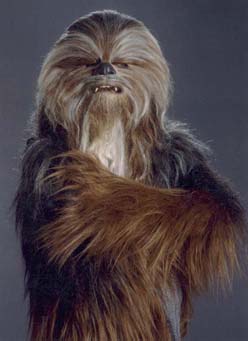
3. BSing is for Wookiees. You want to be a Wookiee, don't you? Of course you do. They're awesome.