The Pumpkin Patch | A Special NaPo Week Edition

6 posts
User avatar
Gender Female
Points 1599
Reviews 363
Image


The Pumpkin Patch | A Special NaPo Week Edition

October 26th Issue - Spooktober


Table of Contents

  1. Spooky Vibes - Creating the Perfect Writing Environment for NaPoWeek
  2. "The Spider and the Fly" ~ A Spooky Poetry Rec
  3. Distilling Autumn: Exploring Images and Themes in Autumn Poems
  4. Finding Poetry Inspiration In Nature
  5. The Spookiest Poetry Words

A Note From Our Editor...

Well, here we are - already in October. I don't know about you, but my year has flown. So much has happened and I've experienced so much change in the last six months. It's been transformative, but also... overwhelming. If you're feeling like me, let's take this week together to rest, reflect, and write. Slow down and soak in life a little extra. Happy Spooktober!

Much Love,
LadySpark
hush, my sweet
these tornadoes are for you


-Richard Siken


Formerly SparkToFlame


User avatar
Gender Female
Points 1599
Reviews 363
Image


Spooky Vibes - Creating the Perfect Writing Environment for NaPoWeek| alliyah


Just a short time ago, fellow-YWSer @Kaia raised the point in her wonderfully helpful and motivational post *here*...

Kaia wrote:People don't talk about how important environment is to writing. Seriously.


And it's gotten me thinking... how do you create the perfect environment for writing those spooky autumn poems? Well, I won't say I'm an expert, but here's a few low-cost ideas that might get those spooky poetry ideas creeping out of your head and on to the page!

SOMETHING SPOOKY IS BREWING ... okay, so deceptively simple but do not underestimate a warm cup of tea! Grab your tea-kettle and let the steam floating from your cup remind you of foggy autumn mornings and ghosts floating through the morning light. It'll also help keep you hydrated to have a little tea at your writing station.

TIME TO GET COZY seriously how is one to write when their circulation is being cut off by the tight stuffy dress clothes you wore to work? Grab your most comfy fuzzy sweater or even that old scarf your grandma knitted for you and let's get writing! Hopefully this will inspire the feel-good-fall-vibes of the season!

I'M VANGOGH? NO, YOU'RE VANGOGH! it's not always practical to visit an art museum to get those inspiration gears turning, but maybe that means we need to bring art to us! Grab a marker, a pen, a pencil, whatever you've got and doodle some of your favorite fall stuff - a pumpkin, a leaf, a half-eaten-pumpkin-pie, more leaves, flowers! as you draw or doodle, think about what phrases come to your mind and feel free to jot them on a paper.

GO OUTSIDE, OKAY JUST FOR A MINUTE The best way to experience the beauty of autumn is by crunching a few leaves under your feet, breathing in some brisk air, and running for your life through a corn maze, whoops! I mean, enjoying the outdoors! So spend a minute or two outdoors to complete your autumnal poetry research, and maybe take a photo or two on your phone to bring the inspiration back inside too!

Happy poetry writing!
hush, my sweet
these tornadoes are for you


-Richard Siken


Formerly SparkToFlame


User avatar
Gender Female
Points 1599
Reviews 363
Image


"The Spider and the Fly" ~ A Spooky Poetry Rec | alliyah


One of our lovely poetry crew Junior Moderators @EllieMae started a thread earlier this month called Share some spooky poems and authors! where everyone is invited to share some of those special poems that are your favorite to read during this time of year! One of my very favorites is "The Spider and the Fly" by Mary Howitt reading link found here - and I thought I'd give a short synopsis and a few thoughts of what makes it special!

Synopsis "The Spider and the Fly" is a poem with an immediate conflict set in the opening line, "Will you walk into my parlor?" said the spider to the fly;" and from there we see the spider try to use charm and wit to convince the fly to come into its trap. The poem has a sing-songy rhyme scheme and a fairy-tale-esque feeling to it, but it is also decidedly tense and spooky as the reader awaits what will happen to the poor fly.

Why the poem works? I think this poem is so successful at being the perfect spooky poem, because it presents a narrative with stakes. It creates characters that the reader can have emotional sympathy to. And it paints a picture! I think all of these are very much keys as you set off to write your own spooky themed poems this month!

Of course! as a disclaimer, not all of our NaPoWeek poems have to be spooky, in fact if you wanted to write a Christmas Carol for each poem of the week that's fine too, but some of the same tips apply - interesting poems are ones that have heightened stakes whether that's true love, life and death, or the last train ticket, have relatable characters or narrators that the reader can connect to, and they don't just tell us things, they show us what they mean!
Last edited by LadySpark on Sat Oct 26, 2024 8:58 pm, edited 1 time in total.
hush, my sweet
these tornadoes are for you


-Richard Siken


Formerly SparkToFlame


User avatar
Gender Female
Points 1599
Reviews 363
Image


Distilling Autumn: Exploring Images and Themes in Autumn Poems | Que


Seasons are a big part of life, and they’re a major inspiration in our poetry as well.

Autumn gets a lot of credit as the “spooky season,” but it’s also the harvest season, sometimes the back-to-school season, and a season of death and change as cold weather comes on and trees lose their leaves.

Let’s take a look at how some of popular seasonal themes and how have been used in poetry.

Harvest

Earlier this season, we saw some tomato poetry pop up on YWS! Many crops are harvested in the fall, including grapes, apples, pears, potatoes, squash and more.

The poem "September Tomatoes" by Karina Borowicz, talks about the sadder side of the fall harvest in the act of uprooting dying tomato plants. In the last stanza, the narrator connects to a larger tradition of the fall harvest:
My great-grandmother sang with the girls of her village
as they pulled the flax. Songs so old
and so tied to the season that the very sound
seemed to turn the weather.

Read the full poem here.

"Songs so old / and so tied to the season that the very sound / seemed to turn the weather" seems particularly descriptive of the way the season of autumn and the period of harvest go hand-in-hand.

"In Harvest" by Sophie Jewett is a little more pastoral: we see wheat being harvested as the poem runs along in a flowing rhyme scheme:
Mown meadows skirt the standing wheat;
I linger, for the hay is sweet,
New-cut and curing in the sun.

This poem can be found here!

Leaves

Leaves turning colors -- gold, orange, red -- leaves falling from the trees, playing in piles of leaves... these are often some of the most common images associated with fall! So much so that they can be the heart of an entire poem.

Here’s one example:
Listen...
With faint dry sound,
Like steps of passing ghosts,
The leaves, frost-crisp’d, break from the trees
And fall.

That's the entirety of "November Night" by Adelaide Crapsey. Can you almost hear that imagery? There is so much wrapped into a small poem about the leaves falling.

Another poem, "The Consent" by Howard Nemerov, talks about ginkgo leaves falling. If you've never had a chance to see ginkgo trees in the fall, they actually tend to lose their leaves all at once!
Late in November, on a single night
Not even near to freezing, the ginkgo trees
That stand along the walk drop all their leaves
In one consent, and neither to rain nor to wind
But as though to time alone: the golden and green
Leaves litter the lawn today, that yesterday
Had spread aloft their fluttering fans of light.

The second stanza questions how this can possibly happen, rounding out the lovely, leafy poem. You can read it here.

Changes

In the fall, many things are leaving as well as falling leaves: the days shorten, the nights get colder, the plants begin to die. Some of these poems talk about leaves too, of course, but they're a part of a broader theme about changes in the season.

I think one of the more well-known poems that tackles this idea in such a simple way is Robert Frost's "Nothing Gold Can Stay." Perhaps you've read it before!

This is the entire poem:
Nature’s first green is gold,
Her hardest hue to hold.
Her early leaf’s a flower;
But only so an hour.
Then leaf subsides to leaf.
So Eden sank to grief,
So dawn goes down to day.
Nothing gold can stay.

This poem captures the way a beautiful season doesn't linger: it's a transition from summer to winter, and the golden leaves we may admire might come down in a rainfall in a few days.

Even William Shakespeare wrote about fall! His Sonnet 73 describes an autumn scene:
That time of year thou mayst in me behold
When yellow leaves, or none, or few, do hang
Upon those boughs which shake against the cold,
Bare ruin’d choirs, where late the sweet birds sang.

In this poem, the narrator is comparing the autumn to himself: he describes himself as aging and nearing the end of his life. Like with Frost's poem, "nothing gold can stay" at the end of this sonnet, but it can be loved nonetheless:
This thou perceiv’st, which makes thy love more strong,
To love that well which thou must leave ere long.

Find the full sonnet here.

Endings and Beginnings

Fall is a season for endings: for example, summer is over! But, it's also the first step to beginning again.

I thought that "First Fall" by Maggie Smith was a poignant reminder of the cyclical nature of seasons. In the poem, the narrator is carrying their young child through the trees in the park. The second half of the poem reads:
Fall is when the only things you know
because I’ve named them
begin to end. Soon I’ll have another
season to offer you: frost soft
on the window and a porthole
sighed there, ice sleeving the bare
gray branches. The first time you see
something die, you won’t know it might
come back. I’m desperate for you
to love the world because I brought you here.

See the full poem here.

The fall ending may seem scary, especially to a child who hasn't experienced it before. But this poem reminds us that plants will grow again, and life will return.

Pumpkins and Turkeys

Last but not least, for a quick mention of pumpkins and turkeys!

Pumpkins are often associated with Halloween, and one sweet depiction of the pumpkin's role in the season is found in "Theme in Yellow" by Carl Sandburg.

I spot the hills
With yellow balls in autumn.
I light the prairie cornfields
Orange and tawny gold clusters
And I am called pumpkins.
On the last of October
When dusk is fallen
Children join hands
And circle round me
Singing ghost songs
And love to the harvest moon;
I am a jack-o'-lantern
With terrible teeth
And the children know
I am fooling.

And last to mention is a poem by Paul Laurence Dunbar, "Signs of the Times." He writes about the U.S. holiday of Thanksgiving with a running theme of a turkey in the barnyard, but throughout the poem a number of lovely fall images are on display as well, including geese flying south, cider presses, cooking, and pumpkins.

The first stanza reads:
Air a-gittin' cool an' coolah,
Frost a-comin' in de night,
Hicka' nuts an' wa'nuts fallin',
Possum keepin' out o' sight.
Tu'key struttin' in de ba'nya'd,
Nary step so proud ez his;
Keep on struttin', Mistah Tu'key,
Yo' do' know whut time it is.

The full poem is here!


There are so many fall themes and images to explore, and I hope you enjoyed taking a look at a few of them and how they're portrayed in various poems!
Last edited by LadySpark on Sat Oct 26, 2024 8:58 pm, edited 1 time in total.
hush, my sweet
these tornadoes are for you


-Richard Siken


Formerly SparkToFlame


User avatar
Gender Female
Points 1599
Reviews 363
Image


Finding Poetry Inspiration In Nature | EllieMae


Do you feel inspired when you go outside? I sure do! In this article I want to talk about how you can find poetry inspiration when going outdoors and exploring the world. One of my favorite hobbies is travelling, so I have had plenty of time to be alone, away from home, and reflect on my own personal writing. First, let's talk about going somewhere high, like the mountains.

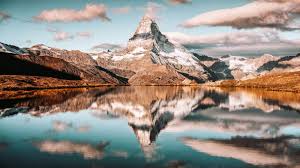
Mountains: In a lot of myths and scripture, journeying to the mountains can be a symbol of traveling nearer to a higher power or a God. The mountains are often away from other civilizations, with only the sounds of wildlife and nature to keep you company. They bring you closer to the sky, the stars, the moon, the sun, and everything in the universe.

Image


When I was younger, I would drive up into the mountains with my guitar, big jacket, and notebook and I would write songs at the top peak. I always felt more inspired and safe, knowing that I was alone, without any listening ears or judgement. The mountains feel calming and peaceful... everything functions wthout overbearing human control.

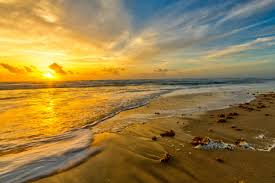
Beach: The beach can be a place of magic and excitement. There are countless tales of what lives deep down, further than humans have been able to explore. Is there a lost city? Mermaids? Or perhaps hidden, spooky secrets, thrown down for no one to ever find. Whatever it is, some people feel called to the beach and the ocean.

Image


I am blessed to live in a place where I can go to the beach anyday. Something about the smell of the ocean and the sand, the fisherman and the sailboats, it feels like home. To me, the beach inspires magical poetry and dreams. It is also a place I go to meditate and sit on washed up logs, collect beautiful shells, and run my hands through the sand.

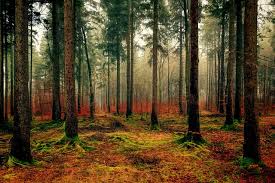
Woods: The woods are a great place to go to write spooky poetry. A lot of horror movies and books take place in remote areas, where the characters are away from the help of any other humans... at least good humans. But at the same time... the woods are beautiful. I can so clearly smell the falling leaves, the crisp autumn air, the wet logs, and I can hear the way my boots crunch the soil beneath my feet.

Image


Venturing to the woods can be peaceful too, sort of like the mountains. Instead of being somewhere high, you are somewhere low, somewhere where no one can find you. Perhaps in a world of so much noise, the woods are somewhere you can go to silently reflect and ponder.

Wherever you decide to travel to write some poetry this month, I hope that it can be a peaceful and good experience for you. Happy writing :D
hush, my sweet
these tornadoes are for you


-Richard Siken


Formerly SparkToFlame


User avatar
Gender Female
Points 1599
Reviews 363
Image


The Spookiest Poetry Words | EllieMae

This Halloween season, you might find yourself in the mood to write some poetry. Have you been searching for some unique, spooky words to use? If so, this article will help! Here are my top 4 spooky words I am planning to incorporate into my poetry this month.

Image


Elditch: "uncanny, unearthly, and weird in a supernatural way"

If you are wanting to write about goblins, elves, or other supernatural creatures, Elditch is a great word to use. Examples include, a ghost story could possess a lot of elditch elements, to describe something that is sinister or ghostly.

Pallor:" an unhealthy pale appearance"

This is an amazing word to use when describing characters who are very pale, perhaps after witnessing a horrific scene or event... or maybe they even saw a ghost.

Tenebrous:"Dark, shadowy, or obscure"

If you are looking for a great descriptive word to describe your dark manors, haunted houses, or graveyards, tenebrous is the word for you!

Wraith:" A ghost or ghostlike image of someone, especially one seen shortly before or after their death"

Wraith is another fantastic word to use to spookify your Halloween tales this season. Perhaps you have a character who is trapped in a ghost-filled mansion, unknowingly approaching their death. This word can be great for poems too, especially to be used as a symbol or a narrative.

Image


Whether you are writing seven spooky poems this NaPo week, working on your novel, or something in between, I hope that these spooky words can help you in your writing adventures. Until next time!
hush, my sweet
these tornadoes are for you


-Richard Siken


Formerly SparkToFlame


Surround yourself with people who are serious about being writers, and who will tell you, ‘Hey—you can do better than this.’ Who will be critical of your work, but also supportive. And who will not be competitive in a negative way.
— Isabel Quintero