"Synesthesia"- The Sirens

3 posts
User avatar
Gender Female
Points 9692
Reviews 3900
Hey Ryan!

I have to admit, I really like this poem. You obviously spent a lot of time crafting it and it shows. It rolls off easily from the tongue and seems to bounce... a lovely thing for a sonnet to have. :) Also, I adore your word choice. Your words are just interesting! They're varied, they work well together, and they make the work intensely descriptive and colorful.

And besides... this poem reminds me of The Odyssey. How much more awesome can it get? ;)

So yep! Love it! :D
Ubi caritas est vera, Deus ibi est.

"The mark of your ignorance is the depth of your belief in injustice and tragedy. What the caterpillar calls the end of the world, the Master calls the butterfly." ~ Richard Bach

Moth and Myth <- My comic! :D


User avatar
Gender Male
Points 6086
Reviews 43
i think the choice of words was what i really did enjoy in this pieces they were carefully selected to confuse me, i actually did not grasp the meaning f the poem, the point of the title how it relates to the poem. there has to be a way for you to be able to draw your audience along they will only come along if the meaning tio what they read is easily understandable. and bye the way I think the whole poem is too jampacked you have to use a poetic way of formatting, it will be more clear.
when the answer to everything is lost then turn to the question in everything, cause everything is the only place you probably have not search


User avatar
Gender Female
Points 4987
Reviews 163
Wait. Wait, wait wait. Debussy wrote something OTHER than "Claire de Lune"? Why I'm mortified. Does Edward Cullen know about this?

I kid, I kid. I'm practising his "Danses sacrée et profane" at the moment, and it's driving me crazy, so I am going to take it out on you.

Debussy is one of my very favourites, he revolutionized chamber music for us lowly harpists, so you must excuse me if I become a bit of a fangirl and provide you useless knowledge you probably already possess. It was clever of you to choose a classical structure, as Debussy was drawn to them, but I'd be curious to see a sonnet you would write inspired by a sonata, translating the restrictions of one form to the restrictions of another. It's funny, you say 'Impressionist' to most people, and they think 'fuzzy', when of course the Impressionists in art and music were just working on a larger scale, and far from being vague they were meticulous and exact. They actually have piano rolls of Debussy playing his own pieces, and far from the rhubato and melodrama of their usual modern renditions, they are quite plain spoken and steady. Debussy was notoriously protective of his notes, he would hide his works in progress even from his friends and family because he wanted his processes to stay a secret. He was quite mathematical in his approach, and much of what he composed was based on the pentatonic scale and the whole tone scale, partly through his being influences by Asian music, gamelans in particular, (Just as Matisse was inspired by Japanese art at the time). Whatever notes you play in one of those scales, it can never sound dissonant, so it's kind of a blank slate, emotionally. Also he really liked building things on fourths and fifths. We have a saying, "Every time you write consecutive fifths, Bach kills a kitten". Debussy must have hated kittens.

"Synesthesia"- The Sirens


Here are my opening impressions. I am intellectually aroused in the title by these two concepts, that of fusing sense imagery to create a more acute impression, and the extending of familiar humanity into the surreal. The Synesthesia fits with the Impressionist idea, exposing the raw components, the flecks of primary colour, the individual notes, so that the stubborn urge of the human brain to make sense of things combines them into the gesture within the mind itself. By writing words that are in a way distinct from one another, from different senses, for example, it becomes fresh, vivid to the audience not only because human experience is 'multimedia', but because they have to put the pieces together themselves. The Sirens also summons the Classicism within Debussy, and its own set of imagery, beauty, femininity, but scratch the surface, manipulation, cruelty and death. The Sirens are pretty because they want to kill you.

In mind a hue distinct, a harmony
of soft allure- “oh Jack, my love”- a wind


I'm not sure I like 'in mind'. I suppose it is ambiguous, in a way, you think about the opening of the piece, and it kind of ripples in from nothing, these glimpses. What I find distinctive about the opening is the little flashes of the 'voice' of the sirens being passed from the choir to the woodwinds, we aurally blend them into one another and make them into the one sound, this superhuman sound. I do very much get the feel of that from the fragmentation of the opening lines, but I think from a sonics perspective, "in mind' is too direct and abrupt. It kind of makes the imagery concrete even though it's purpose is making it abstract. It also makes the iambic foot very heavy, there isn't much balance between the two words, you don't want the heartbeat of it just yet. 'N's, 'm's and 'd's are earthy and warm, I think you'd be looking to brush in on sibilance, which you are well versed in. I know this is really anal nitpicking, and changing anything in structured verse is the mother of all headaches, but tis the nature of the beast. The hue distinct, the soft allure, they're good, the quote, like when a cor anglais gets too excited about their little phrase amongst the swirl, very good.

conducts the song amidst a crew of glee


Don't hate me.... don't hate me....don't hate me. It needs to be 'conducts the song of glee amidst the crew'. There I said it. People have very short attention spans, it won't make sense, "a crew of glee'? Personified glee? Because that would be awesome" they'll say, which won't quite be the point. Their short attention spans will interrupt the flow. Also I think there is a certain number of times you can twist phrases around from the way you would say them for the convenience of rhyme before people realize it's a poem, scream, and go and hide in a newspaper.

beset cadets; the sailing knaves rescind

Having said that huzzah for internal rhymes, and assonance. It is as fun to read as it must have been to write, and certainly brings about the glee.

a love of home when melodies of flutes
caress and shrewdly guide the boys beyond


Naughty, naughty flutes. I have no criticism, the iambic foot is heavier, but here it really needs to be, if we're talking lascivious seamen, and it kind of slips slyly into that stronger pulse too. V clever.

the bow in blinding hope, as acrid roots
would lust for blooms chromatic and breeze fond.


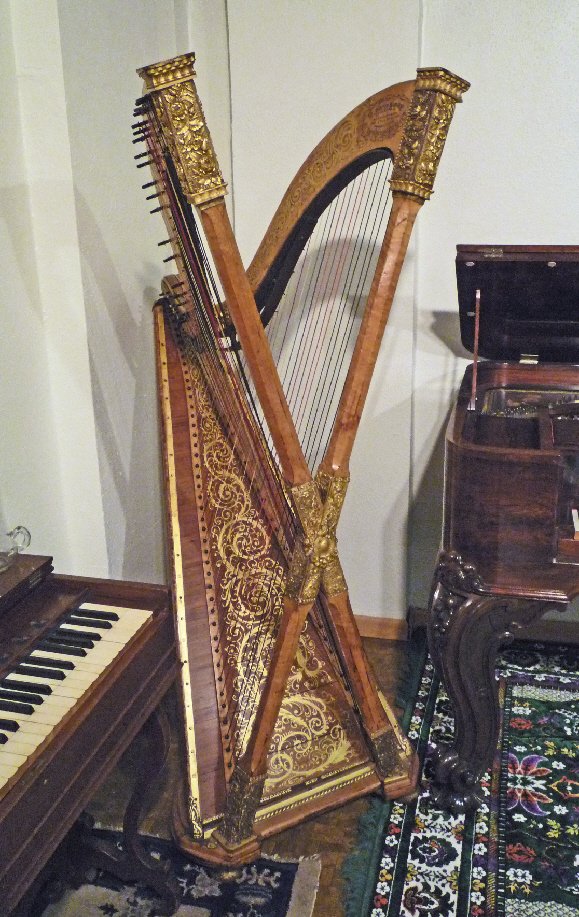
'Chromatic' doesn't work, which is kind of ironically true to Debussy in a way. He wrote for chromatic harp because he was commissioned to, this piece would have been played on one, but Debussy hated them. Huge things, they have two columns that go through one another
Image
Basically a ship by themselves. But then Debussy didn't really stick to the chromatic scale that often, he was far more concerned with the pentatonic/whole tone/fourths/fifths thing, so nothing he wrote for chromatic harp was unplayable on the conventional pedal harp.

My point amongst the further useless knowledge is 'chromatic' is where, by your own admission, the iambic structure breaks down, and the thing is, you don't need the word. You may feel obliged to write it, just as Debussy was obliged, because it is using technical musical language, but it's not a word worth breaking gait for, it's not relevant enough to the context, of the poem or inspiration.

Or you could always leave it there and pretend it's a meta reference to Debussy harp lore for giggles.

Another thing. "breeze fond". I first read this as "breeze frond", which is actually a very cool image. But as it is, I reiterate the twisting of phrases for rhythmic gain, posthumous adjectives died with Coleridge for a reason.

The feasting water’s belly churns with greed,


Steady return to the iambic foot, nice personification. 'Churns' is good, a verb can do the work of a paragraph of adjectives.

Devouring flesh rain in equal cadence,


No. NO. NO NO NO NO NO NO NO NO NO. NO. No. No. What were you thinking? No punctuation to distinguish 'flesh' and 'rain', so you have this grotesque conglomerate, setting aside the fact that you have two strong words that undermines the whole rhythmic structure. Then they're separated out into two elements with 'equal', which means you have to read back and ruin the flow. Did you read this aloud to yourself? You must have some kind of distinguishing pause or something.

I'm fairly sure 'equal cadence' makes no sense, I mean, cadence is at the end of the couplet, that's all I've got. "Equal measure", absolutely, it's still a musical reference, and in fact that has the whole slipping away of the musical cells. Yes, "measure" is also a normal word that normal people use, but we can overlook that, because it still has a glittering double meaning that will put a wry smile on the intelligentsia, guaranteed.

Ahh, but there is still the problem of the darned foot, which both cadence and measure blow to heck, not mensioning dissonance, but then dissonance and cadence was a fairly mismatched masculine rhyme to begin with, I'm not sure any of them fit to begin with.

I'm mean because I know you're better than that.

The brooding maidens sing to stir and feed,
The sea with men who covet dissonance.


The foot is strong through here, the enjambment is a bad taste; "Feed,the sea". There is absolutely no reason for the comma, but even without it, it's too disjointed, the meaning is lost. This stanza can be much more brutal, we are too far distant from the subject, 'sing to stir and feed', we're already gone.

But they don't covet dissonance, do they? That's not what Debussy's sirens are luring them in with, it's all very consonant, glistening, bright things, 'behold my phosphorescent bra'. The dissonance is the knife.

A boundless seaweed cradle will replace
The hissing Sirens’ promised warm embrace.


That's practically Macbeth there. I can't fault it. Lovely.

Very fine work. Debussy would be proud.


It is most unlikely. But - here comes the big "but" - not impossible.
— Roald Dahl